
Before the nikah: conversations about married life
Discuss money, housing, faith, children and family boundaries before marriage, with practical questions, a worked example and a conversation checklist.
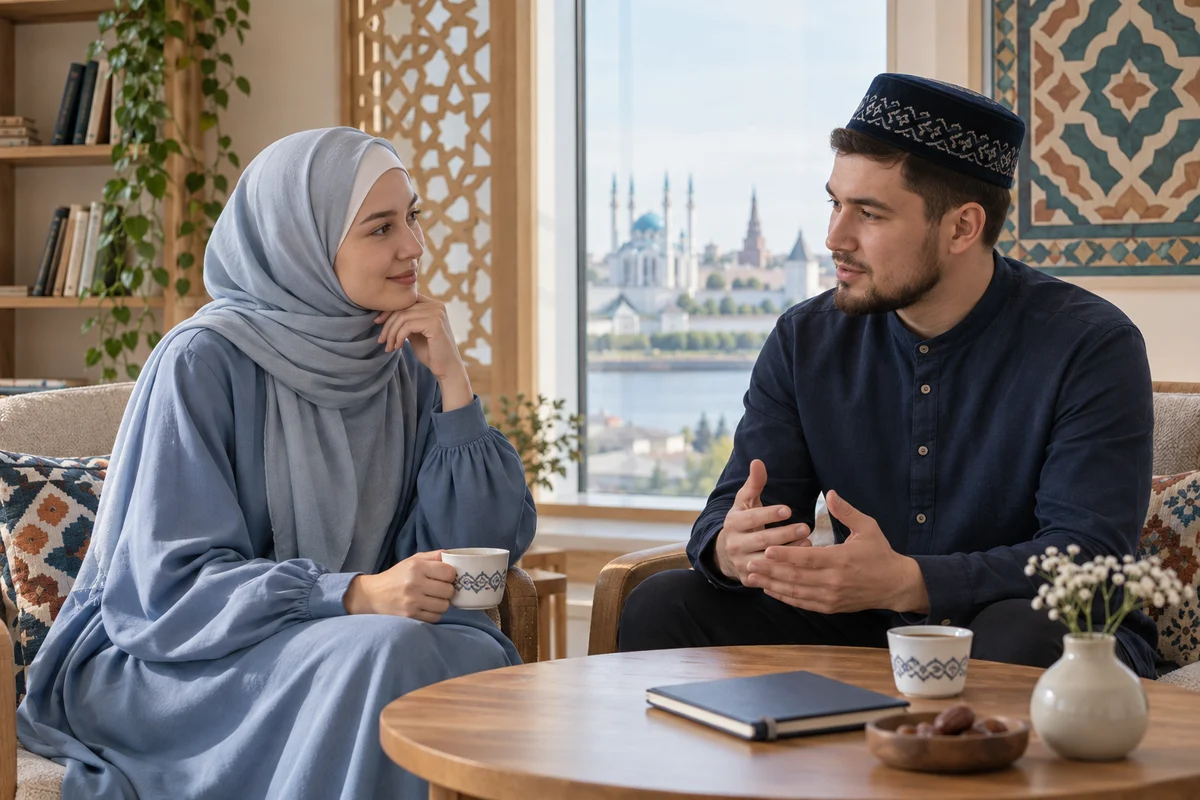
Discover everyday life, not the perfect candidate
Wanting a good person to marry is understandable, but it leaves many practical questions unanswered. One person imagines a separate home and two working adults; the other expects life with parents and a spouse who is always at home. Neither necessarily intends to mislead. Their assumptions may simply feel too obvious to mention. Before the nikah, translate words such as family, care and responsibility into observable everyday arrangements.
Begin with your own expectations rather than demands for a prospective spouse. Describe an ordinary Tuesday after the wedding: where you wake up, who cooks, how long the commute takes, who visits parents and when you talk together. This sketch can reveal expectations that might otherwise surface only as disappointment. Ask the other person to describe their day independently, without suggesting the answer you hope to hear.
The purpose is not to win approval at any cost. An honest ‘I do not know yet’ can be more useful than an impressive promise. Ask how the person would find an answer: checking rental prices, discussing working hours or consulting a qualified professional. Notice the conversation itself. Can you ask follow-up questions, acknowledge a mistake and take time to think? Compatibility is not a questionnaire score; it also involves handling differences.
The US Supporting Healthy Marriage evaluation studied education for already-married, lower-income parents. MDRC’s 2014 final report found small positive effects on relationship quality after 30 months, but no increase in couples staying together. This was not a study of preparation for nikah, and it does not establish the effectiveness of any particular Mawaddah course.
A realistic promise of preparation is more modest: a vocabulary for difficult subjects and a clearer view of unresolved questions. Neither a course, religious commitment nor matching answers guarantees a happy marriage. Deciding not to rush can also be a worthwhile outcome. If an important subject is repeatedly postponed until after the wedding, ask what prevents discussing it now and what information is still missing.
Explore how faith shapes everyday life. What does supporting religious practice mean to each of you? How do you approach learning, legitimate differences of opinion, celebrations and family customs? Avoid turning the conversation into a contest in piety. Ask for examples: ‘If I do not understand something, how would we find an answer?’ and ‘How do you usually speak to someone close to you who does things differently?’
Qur’an 30:21 connects marriage with tranquillity, affection and mercy. This is a foundation of values, not a detailed instruction about who pays for every purchase or how often to visit relatives. Questions about religious obligations and marriage conditions deserve separate discussion with a qualified adviser who understands your circumstances. A brief quotation should not be used as a shortcut to winning an argument.
Distinguish religious conviction, family custom and personal preference. ‘Our family gathers every Friday’ describes one household’s tradition; it does not automatically settle another household’s obligations. Respecting a custom can coexist with discussing distance, shifts and exhaustion. Try: ‘Keeping this connection matters to me. What rhythm could we both manage?’ This expresses a real value without prescribing the other person’s answer.
What preparation can and cannot promise
Discuss housing in concrete terms: where, with whom, for how long, with what money and with what alternative if the plan fails? ‘We will move later’ is not yet an arrangement. Clarify the conditions for moving, the savings needed and when you will review the plan. If relatives will share the home, discuss privacy, guests, the kitchen and space for the couple to make their own decisions.
Talk about employment without asking anyone to guess your expectations. Does each person intend to study or work? What might change after relocation, childbirth or loss of income? Who would cover essential expenses during a transition? Discuss known debts, support for relatives and recurring commitments. The purpose is a shared picture, not a demand for banking passwords or for transferring assets to another person.
Set aside a separate conversation for wedding expenses and mahr: what each side expects, what is affordable and which questions need religious or legal advice. An expensive celebration is not evidence of sincere feelings. Ask whether there will still be money for housing and ordinary life afterwards. If the answer is unclear, prepare an estimate before arguing about generosity or the dignity of either family.
Boundaries with parents are not a choice between respect and marriage. Discuss which decisions the couple will make themselves, whom they can tell about a disagreement and when relatives’ help is welcome. Ask a difficult but useful question: ‘If my mother and you disagree, how would I speak with each of you?’ Look for a respectful process, privacy and room for a shared decision, not a promised winner.
Agreement that you both want children is only the beginning. Discuss timing, upbringing, languages, education and each parent’s participation in everyday care. Health and circumstances can change plans. ‘How would we support each other if life went differently?’ may reveal more than a precise preferred number of children. Medical questions belong in an individual consultation, not in a compatibility questionnaire or a demand to guarantee the future.
Household work also needs translating into actions. ‘I will help’ can leave one person permanently responsible for noticing and organising everything. Discuss whole tasks: noticing depleted supplies, planning a shopping trip, buying the items and putting them away. Include less visible work such as appointments, school messages and relatives’ gifts. Ask how responsibilities would change if either person were ill or especially busy.
A fictional example: Bulat tells Aliya they will live with his parents for a while after marriage. He means three years while saving to buy a home; she imagines two months while finding a rental. Both might answer yes to living with parents. The difference appears only after questions about duration, privacy and the financial plan for separate accommodation.
Faith and daily expectations
The first useful step is not deciding whose misunderstanding was worse. Each describes their original assumption. They then check suitable rents, discuss actual income and ask the parents how they imagine sharing the home. Instead of a promise that everything will work out, they have two options to examine. Each has costs, limitations and conditions that make it acceptable or unacceptable.
Suppose Aliya does not agree to long-term shared housing, while Bulat cannot currently offer a separate home. Pressure and assurances that she will get used to it do not resolve the difference. They could postpone the decision, explore another realistic option or acknowledge that their present plans are incompatible. Slowing down does not diminish either person; it avoids building a marriage on conflicting versions of one agreement.
Do not attempt every subject in a single evening. Choose one, agree on a time and use a meeting format consistent with your religious boundaries. Each person answers first, then checks their understanding: ‘Have I understood correctly that…?’ Only afterwards explore options. Not every relative needs to attend. The participants should help clarify matters, rather than make someone feel obliged to agree publicly.
Afterwards, record what you agree on, where you differ, what remains unknown and the next action with a date. This is a reminder, not a legal contract or a permanent prohibition on changing your mind. ‘Check three rental options by Sunday’ is more useful than ‘solve housing’. Begin the next conversation with that specific action instead of repeating the entire disagreement from the beginning.
Notice how small arrangements are carried out. If someone promised to check information, did they do so or openly explain a delay? Can they say that something is unacceptable without humiliating you? Avoid secret tests and provocations, which introduce a separate problem of trust. Ordinary interactions and direct questions offer more useful information than trying to catch someone making a mistake.
When answers differ, identify the type of disagreement. A preference may allow a trial arrangement; missing information calls for checking; a fundamental boundary should not vanish under pressure. Do not promise to change convictions merely to accelerate the wedding. A pause is for understanding, not punishment. If there is fear, threats or coercion, safe individual support matters more than another joint discussion.
Must everything be discussed before the nikah? No conversation can predict every future situation. But housing, commitments, children, parents’ involvement and respectful refusal should not deliberately remain vague. When sharing this guide, add: ‘I want to answer these questions too. Shall we choose one subject?’ That makes it an invitation to mutual preparation rather than a list of accusations or a verdict on compatibility.