
Where to meet for marriage: a map of options in Russia and the CIS
Family networks, community, education, events, matchmakers and apps — how to widen the search intentionally and safely.
Search is a system, not an accident
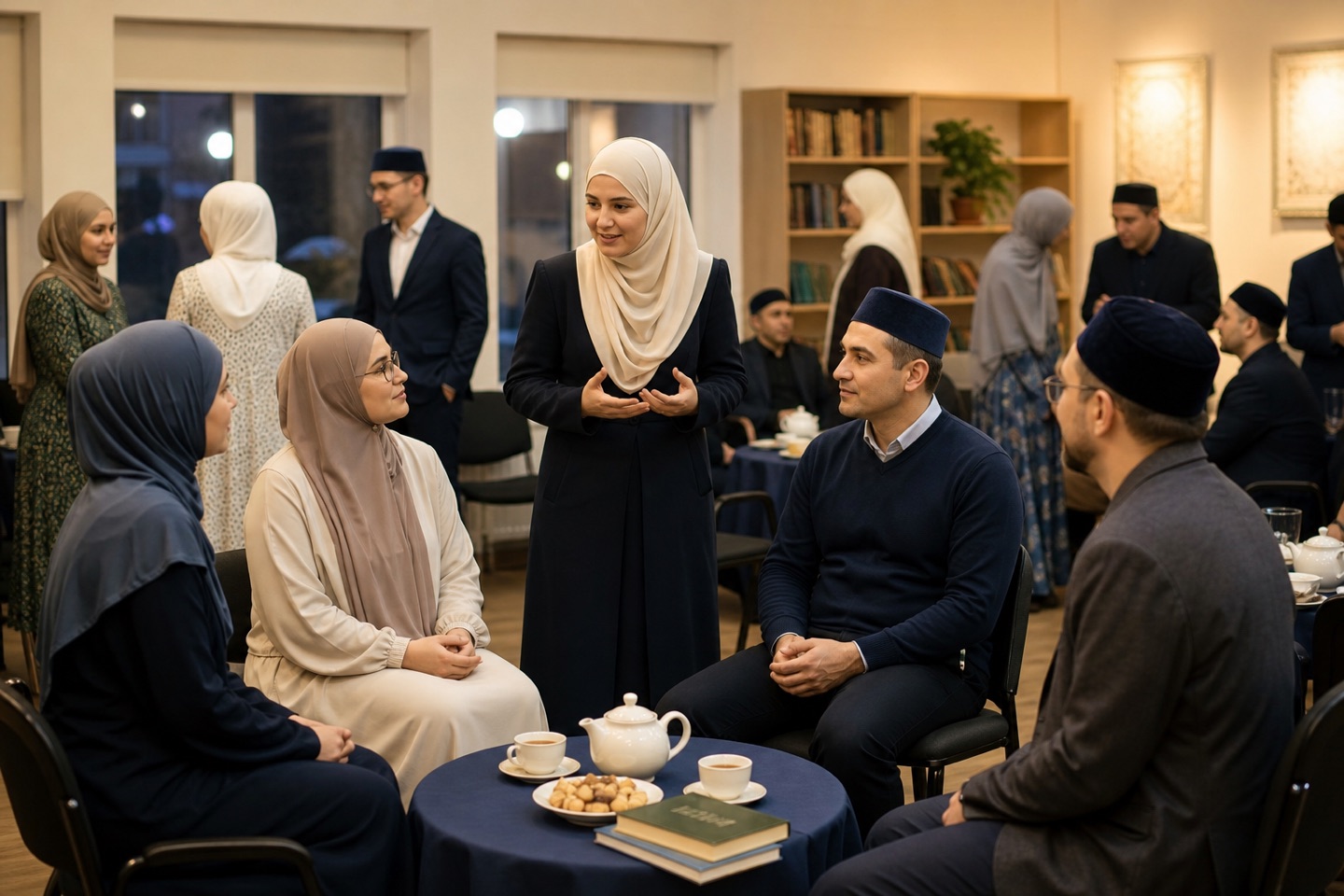
The question ‘where can I meet someone?’ often assumes there is one correct place. In reality, families in Russia and the CIS begin through overlapping circles: relatives and friends, mosques and communities, education and work, social projects, weddings and family events, matchmakers and digital services. It is usually more effective to use two or three suitable channels than to wait for a chance encounter.
A trusted network can confirm basic facts and explain family context, but a relative’s recommendation does not replace your own decision. Give two or three trusted people a clear brief: age range, location, approach to faith, plans for children and relocation, and the conditions under which you would not continue.
Community, educational and volunteering projects let people observe responsibility, communication and respect for boundaries in real situations. A mosque is not a dating service, however, and attending an event does not imply consent to romantic attention. Contact must remain respectful and voluntary; a transparent family-oriented format is preferable to surveillance or pressure.
Introduction channels in Russia and the CIS
Matchmakers and community initiatives can help people with a small social circle or those living far from major cities. Before sharing a profile, ask who stores the data, who will see photographs and phone numbers, how participants are checked, how deletion works and what the fee covers. A promise to ‘deliver a marriage’ is not a guarantee: an intermediary can introduce people but cannot ensure compatibility or consent.
Online search expands geography. A 2024 VCIOM survey found that 24% of Russians had tried dating sites or apps, rising to half among respondents aged 24–32. This covered the Russian population as a whole, not Muslims specifically, and should not be presented as Muslim-marriage statistics. It does show that digital discovery has become a normal part of partner search.
A sound process combines reach with verification: a concise and honest marriage-oriented profile, an early conversation about values and plans, identity checks and a safe in-person meeting. If family involvement matters, agree on when it begins. Premature intervention may create pressure, while endless secret messaging can create intimacy without responsibility.
A safe transition to a serious conversation
Living in a small town does not force a choice between isolation and immediate relocation. Regional educational and volunteering projects, referrals through trusted families and location-aware services can widen the circle. Before emotional attachment, discuss who could relocate, work, housing and whether a long-distance process is realistic.
A practical first step is a one-month search map: two trusted connectors, one open community event or project and one specialised service. The objective is not the largest number of conversations but a few contacts with clear intentions, respected boundaries and freedom to decline. Specific religious rules on communication and mahram involvement should be checked with a qualified scholar you trust.